
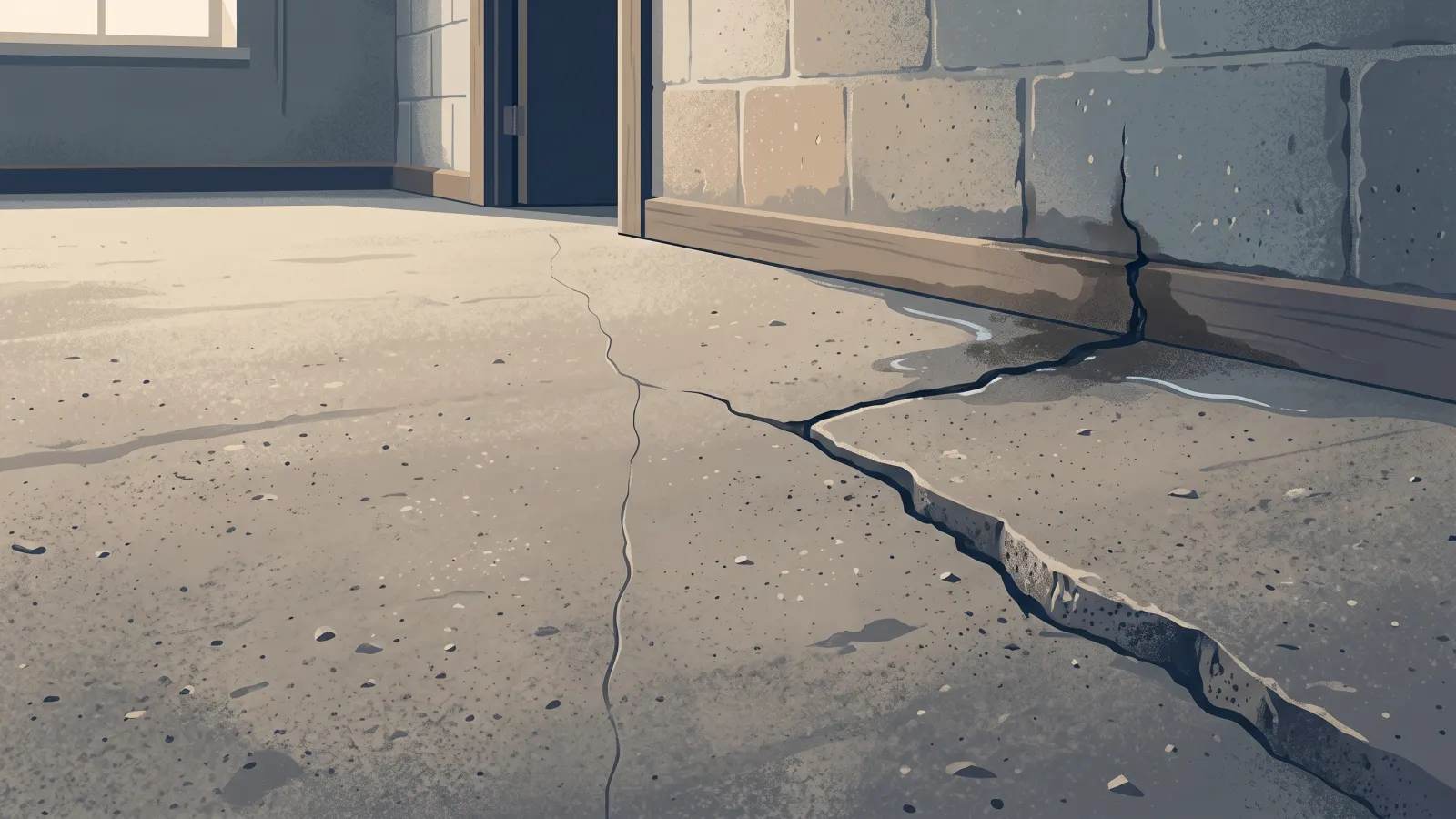
Most cracks in a basement floor are thin shrinkage cracks that formed as the concrete cured, and on their own they are not a structural problem. A floor crack is worth worrying about when it lets water in, when one side sits higher than the other, when it keeps getting wider, or when it lines up with cracks in the walls. Those signs point to water pressure under the slab or soil moving, and that is what needs fixing, not the crack itself.
In short: a hairline crack of even width that stays dry is usually shrinkage. A crack with one edge raised, a crack that grows, or a crack that gets wet after rain or a thaw needs a look. Mark and photograph floor cracks now, check them after the spring thaw, and book an inspection if they change or carry water.
Written by Kevin Cole, who usually carries out Swift Dry Construction's inspections. Swift Dry is a Michigan licensed residential builder (#262400278) based in Farmington Hills.
Why basement floors crack
A basement floor is a concrete slab poured on gravel or soil inside the foundation walls. In most houses it is not holding the house up: the walls and footings do that. The slab is there to give you a floor.
Concrete shrinks a little as it cures, and a large slab almost always cracks somewhere to relieve that stress. That is why many basement floors have one or two thin cracks running across them, often from a corner, a drain or a post. They usually show up in the first years after the floor is poured and then stop.
Other cracks have a cause underneath:
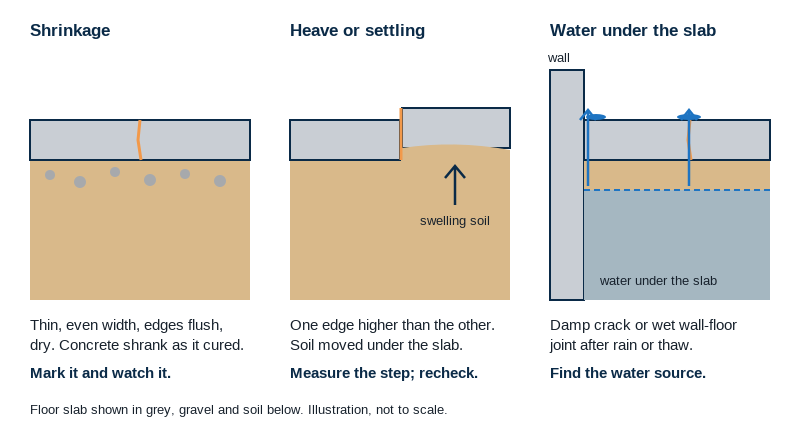
- Water under the slab. When the ground around and under the house is saturated, water pushes up on the floor. It finds the cracks, the joint where the floor meets the wall and the floor drain. That pressure is highest in spring and after a thaw.
- Soil moving under the slab. Clay soil is common across Metro Detroit. It swells when it is wet and shrinks when it dries. Under a slab, that can lift one part of the floor or leave a part unsupported, and the crack shows an edge that is higher on one side.
- Settling fill. If the gravel or soil under the floor was not compacted well, it can settle over time and leave a dip with cracks around it.
How to tell the difference
| What you see | What it usually means | What to do |
|---|---|---|
| Thin crack, even width, dry, edges flush | Shrinkage as the concrete cured | Mark it and watch it |
| One edge higher than the other | Soil moving or settling under the slab | Measure the step, check it after the thaw, get it inspected if it grows |
| Damp crack, water or white residue along it | Water under the slab coming up through the crack | Find where the water comes from before sealing anything |
| Floor cracks that line up with wall cracks | The foundation is moving as well as the floor | Get the walls looked at |
| Water at the joint where the floor meets the wall | Water coming in around the edge of the slab | Usually a waterproofing job, not a crack repair |
The white chalky residue you sometimes see along a crack is efflorescence: minerals left behind when water evaporates from concrete. It tells you the crack has carried water, even if it looks dry today.
Is a wet floor crack a waterproofing problem?
Usually, yes. If water comes up through a floor crack, the slab is not the cause. Water is collecting under and around the house, and the crack is just the easiest way in. Sealing the crack from the top can move the water to the next weak spot: another crack, the floor drain or the wall-floor joint.
The fix depends on where the water comes from. Sometimes it starts outside, with downspouts dumping at the wall or ground sloping toward the house. Sometimes the water level around the house simply rises after a thaw, and the answer is a drain around the inside edge of the floor that carries water to a sump pump. Our basement waterproofing page explains the options.
What to record this winter
Floor cracks change slowly, so a record now is worth more than a guess later.
- Mark both ends of each crack with a pencil and write the date beside it.
- Photograph each crack with a tape measure next to it, from the same spot each time.
- Check whether the edges line up. Lay a straight edge across the crack. If one side is higher, measure the step.
- Note any water. After a heavy rain or a thaw, look along the cracks and the edge of the floor for damp concrete, puddles or fresh white residue.
- Look at the walls near each crack for cracks that line up with it.
Check again after the spring thaw, when the ground is wettest. A crack that has grown past your marks, a step that has got bigger or a crack that has started to carry water is worth an inspection.
Older floors in Ypsilanti
The Ypsilanti service-area page describes the older parts of the city, where some houses sit on stone or brick foundations and many have been added to over the years, so one house can have two or three different foundation types under it. Water tends to get in where they meet. If a damp floor crack runs toward the place where an addition joins the original house, mention it at the inspection, because that join is one of the first places to look.
When a floor crack needs a repair
Have it looked at if the crack lets water in, if one side has lifted, if it keeps growing, or if it lines up with cracks in the walls. A thin, dry, even crack that has not changed in years is low on the list.
What the repair looks like depends on the cause. A dry shrinkage crack can simply be sealed if you plan to finish the floor. A wet crack is a water problem, so the work is about relieving the water under the slab and giving it somewhere to go. A heaved or sinking floor needs the soil underneath dealt with. If the walls are moving too, that comes first.
Basement floor crack questions
Are cracks in a new basement floor normal?
Thin, even cracks in the first years are common, because concrete shrinks as it cures. They are not a reason to worry on their own. Keep an eye on them for water and for one side lifting.
Can I seal a basement floor crack myself?
You can fill a dry shrinkage crack, for example before laying flooring. If the crack carries water, filling it from the top usually moves the water somewhere else. Find the source first.
Why does my basement floor crack get wet only in spring?
Spring is when the ground is wettest. Snowmelt and rain raise the water level around and under the house, and that water pushes up through the weakest points in the floor. A crack that is dry all summer can still be a seepage point every spring.
Do floor cracks mean my foundation is failing?
Not by themselves. The floor slab usually does not hold the house up. Floor cracks matter more when they line up with wall cracks, when the floor has heaved, or when they carry water.
Book a free basement inspection
If a floor crack has lifted, grown or started to carry water, book a free inspection. Call 248-635-3767 or request a visit online. We look at the floor, the walls and the outside of the house, tell you what the cracks mean and whether they need work now, and give you a written quote if they do.
Want someone to look at yours?
Free inspection, written quote, no obligation. Call 248-635-3767 or request a visit online.
- 4.9 on Google (46 reviews)
- Licensed MI builder #262400278
- Free inspection, written price first
- Free 6-month check-up after every job
- Based in Farmington Hills