
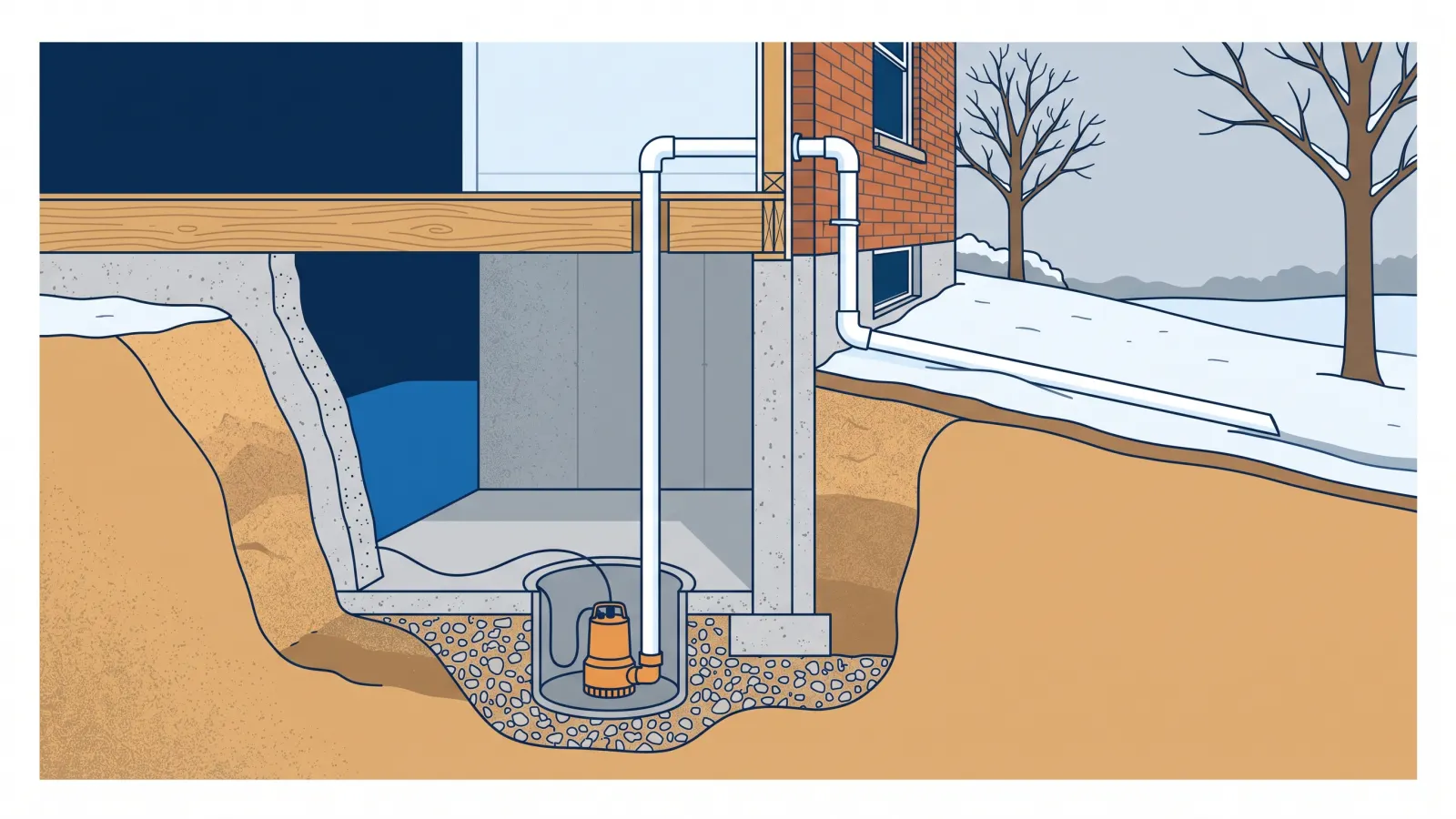
Test your sump pump in the fall, before the ground freezes and before the first big thaw. Pour water into the pit and watch it start, empty the pit and shut off. Then walk outside and check that the discharge line is clear, runs away from the house and will not freeze shut. Those two checks catch most of the problems that turn a dry basement into a wet one in a single storm.
How does a sump pump work?
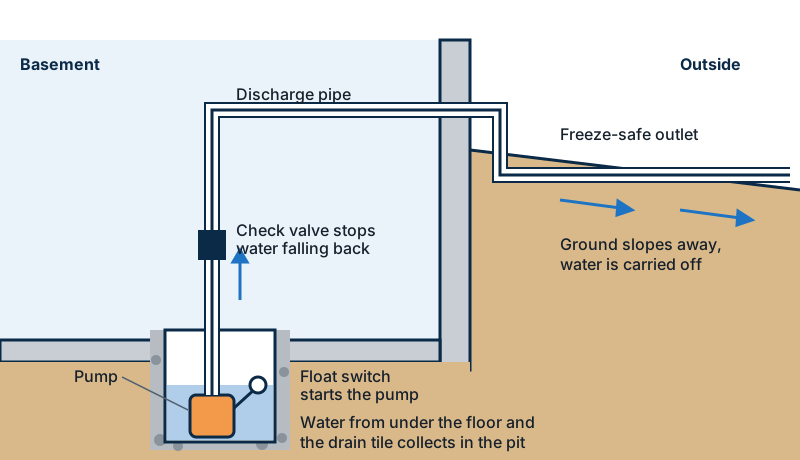
A sump pump sits in a pit, the sump basin, at the lowest point of the basement or crawl space. Groundwater and water from the drain tile around the footing collect in that pit. When the water rises, a float switch turns the pump on. The pump pushes the water up the discharge pipe and out of the house, then shuts off when the level drops.
A check valve on the discharge pipe stops the water in the pipe from falling back into the pit each time the pump stops. Without it, the pump ends up moving the same water twice.
Most home sump pumps are submersible, with the motor under water in the pit. A pedestal pump has the motor on a column above the pit. Both do the same job. The right one depends on the pit and on how much water your house takes on.
Why check it in the fall?
A Michigan winter is hard on sump pumps in two ways. First, the discharge line outside can freeze. A frozen line gives the water nowhere to go, so the pump runs against a blockage or the pit overflows. Second, the pump often sits idle through a dry autumn and then has to work hard in a thaw. A float that has stuck or a pump that has quietly worn out shows up at the worst time.
Clay soil adds to it. Clay is common across Metro Detroit and drains slowly, so after snowmelt or a heavy rain the water stays around the foundation longer and the pump runs longer. Checking now, while the weather is mild and the ground is soft, means any repair happens on your schedule.
A fall sump pump checklist
- Test it with water. Pour a bucket of water slowly into the pit. The float should rise, the pump should start, and the level should drop. The pump should shut off on its own.
- Listen while it runs. A steady hum is normal. Grinding, rattling or heavy vibration is not.
- Clear the pit. Remove debris, gravel and silt that can jam the float or clog the intake.
- Check the power. Make sure the pump is plugged in and the outlet has power. If the outlet is a GFCI type, check it has not tripped.
- Find the discharge outlet outside. Follow the pipe out of the house and check the end is clear of leaves, soil and ice.
- Look at where the water goes. It should empty onto ground that slopes away from the house, not beside the foundation.
- Check the check valve. After the pump stops, listen for water rushing back into the pit. If you hear it, the valve may have failed.
If the pump fails any of those checks, write down what you saw. It helps whoever looks at it next.
Signs your sump pump needs repair
Some sump pump problems are small. Others mean the pump is worn out or too small for the house. These are the signs worth acting on:
- It runs constantly, or turns on and off every few seconds
- It does not run at all when the pit is full
- The water level in the pit does not drop while it runs
- It is louder, or vibrates more, than it used to
- Water came into the basement during a storm even though the pump was running
A pump that cycles every few seconds often has a float set too low or a check valve that lets water fall back. A pump that runs without lowering the water may have a clogged intake, a blocked or frozen discharge line, or simply not enough capacity. A pump that does nothing may have lost power, jammed, or burned out. Fix the cause, not only the pump. A new pump on a frozen line has the same problem as the old one.
Where should the sump pump discharge pipe go outside?
Away from the house, onto ground that slopes away, and not onto a neighbor's property or into a sanitary sewer line. A discharge that empties next to the foundation sends the same water straight back into the soil around the basement and back to the pit.
In winter the outlet matters even more. A line that ends above ground in a low spot can fill with ice. A freeze-safe fitting near the house gives the water a way out if the line further along freezes, so the pump is not pushing against a blockage. Where the yard allows, a buried line carries the water well out past the backfill, the loose soil that was put back around the foundation when the house was built. We cover buried lines in more detail on our buried gutter and downspout extensions page.
What about power outages?
A sump pump runs on household power, and storms that bring heavy rain can also bring outages. A battery backup is a second pump that takes over when the power goes out or the main pump fails. Whether your house needs one depends on how often your pump runs, how much water comes in when it does, and whether the basement is finished. Ask about it at the inspection if any of those apply.
When it is time to call
Call when the pump fails the water test, when it runs far more than it used to, or when the discharge line froze last winter. Also call if you have water in the basement and a pump that seems to be working. That usually means the water is not all reaching the pit, and the answer may be a drainage problem rather than a pump problem, which we cover on our basement waterproofing page.
We install new sump pumps, replace failing ones and repair existing systems. A proper install sets the basin at the low point of the basement in a bed of stone, uses a pump sized to the water your house actually takes on, and runs the discharge out through a freeze-safe fitting. Sometimes the inspection shows the pump is fine and the water is coming from a downspout or grade problem outside. When that is the case, we say so.
Our Canton page explains why flat ground and clay soil keep sump pumps running for days after a thaw, and why an undersized pump or a frozen discharge line is how a dry basement becomes a wet one.
Book a free sump pump inspection
If your pump failed one of the checks above, or you are not sure it will make it through the winter, book a free inspection. Call 248-635-3767 or request a visit online, and we will test the pump, the discharge line and the ground around the house, then give you a written quote before any work starts.
Want someone to look at yours?
Free inspection, written quote, no obligation. Call 248-635-3767 or request a visit online.
- 4.9 on Google (46 reviews)
- Licensed MI builder #262400278
- Free inspection, written price first
- Free 6-month check-up after every job
- Based in Farmington Hills